About Ball Valves
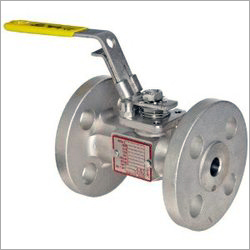
Our provided Ball Valves are a form of quarter-turn valve which used a hollow, perforated and pivoting ball to control flow through it. It is open when the balls hole is in line with the flow and closed when it is pivoted 90-degrees by the valve handle. These valves are widely used in engineering, chemicals and automobile industries due to their rugged design, easy installation and corrosion resistant finish. Our offered Ball Valves are checked by our quality controller in order to ensure a defect free range is delivered to our valued customer end.
Precision Engineering for Reliable PerformanceManufactured to API 6D and ASME B16.34 standards, these ball valves ensure leak-free operation and robust performance. Designed for high-pressure and temperature ranges, the structure supports versatile media, making the valves perfect for challenging industrial environments.
Versatile Connection and Operation OptionsSelect from flanged, threaded, or socket weld connections for seamless pipeline integration. The quarter-turn handle, available in lever or gear-operated styles, guarantees easy manual control and secure locking, offering flexibility to meet specific operational requirements.
FAQs of Ball Valves:
Q: How are these ball valves typically operated?
A: These ball valves use a quarter-turn operation with manual control, utilizing either a lever handle or gear mechanism for quick and reliable opening and closing.
Q: What materials are used in the seat and body of these ball valves?
A: The seat material is PTFE, known for its chemical resistance and low friction, while the body is constructed from stainless steel grades CF8 or CF8M, providing robust corrosion protection.
Q: Where can these ball valves be installed?
A: These valves are suited for industrial, water supply, and oil & gas systems, with end connections available in flanged, threaded, or welded formats for integration into various pipelines.
Q: What is the testing and leakage classification for these valves?
A: The ball valves comply with API 598 and EN 12266 test standards and achieve Class VI leakage classification, ensuring minimal permissible leakage for critical applications.
Q: What benefits does the fire-safe option provide?
A: Fire-safe ball valves offer enhanced protection against external fire incidents, maintaining sealing performance and integrity when exposed to high temperatures.
Q: When is the locking device useful on these valves?
A: A locking device, available as an option, is helpful for preventing unauthorized operation, especially in safety-critical or controlled environments.
Q: What is the process for selecting the right valve port size and end connection?
A: To choose the correct valve, consider the media type, required pressure rating, pipeline diameter (ranges from 1/4 inch to 4 inch), and preferred connection style (ANSI flanged, screwed, or socket weld) for optimal compatibility.








 Send Inquiry

 Send Inquiry
